authorized crew only
sequence XB-900
Veterinary staff were using 10 disconnected systems daily — resulting in delays and manual errors. We needed to consolidate these into a single, intuitive platform to improve clinic workflows and outcomes.
I led end-to-end design: from mapping real-world workflows to crafting clean, testable interfaces. I led research, built wireframes, and designed tools that reflected the pace and constraints of real clinical workflows, while collaborating with developers to bring them to life.
Worked with a cross-functional team: PM, PO, and 4–8 developers. Used Figma for design, Axure RP for interactions, and spreadsheets, FigJam, and surveys for insights.
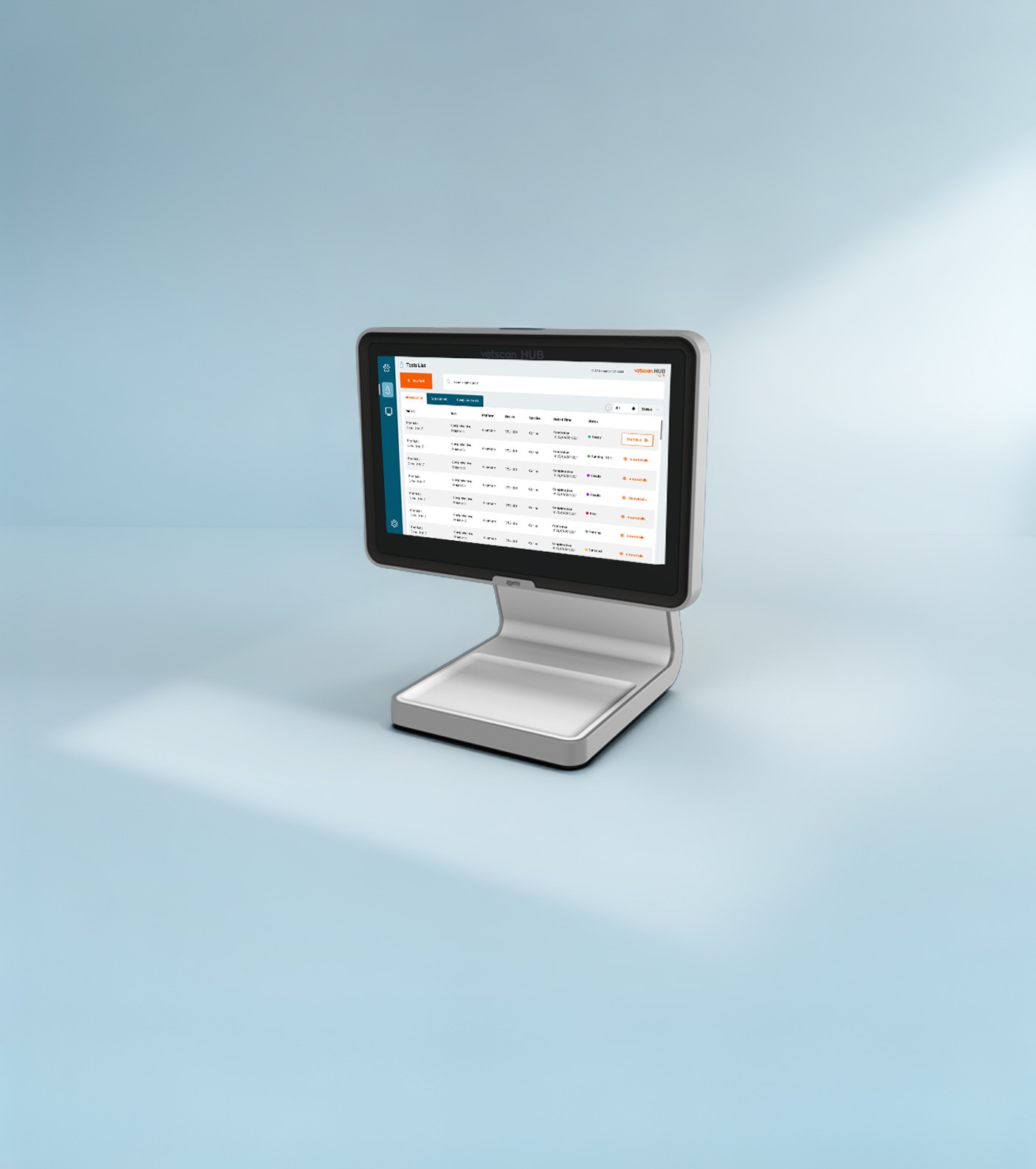
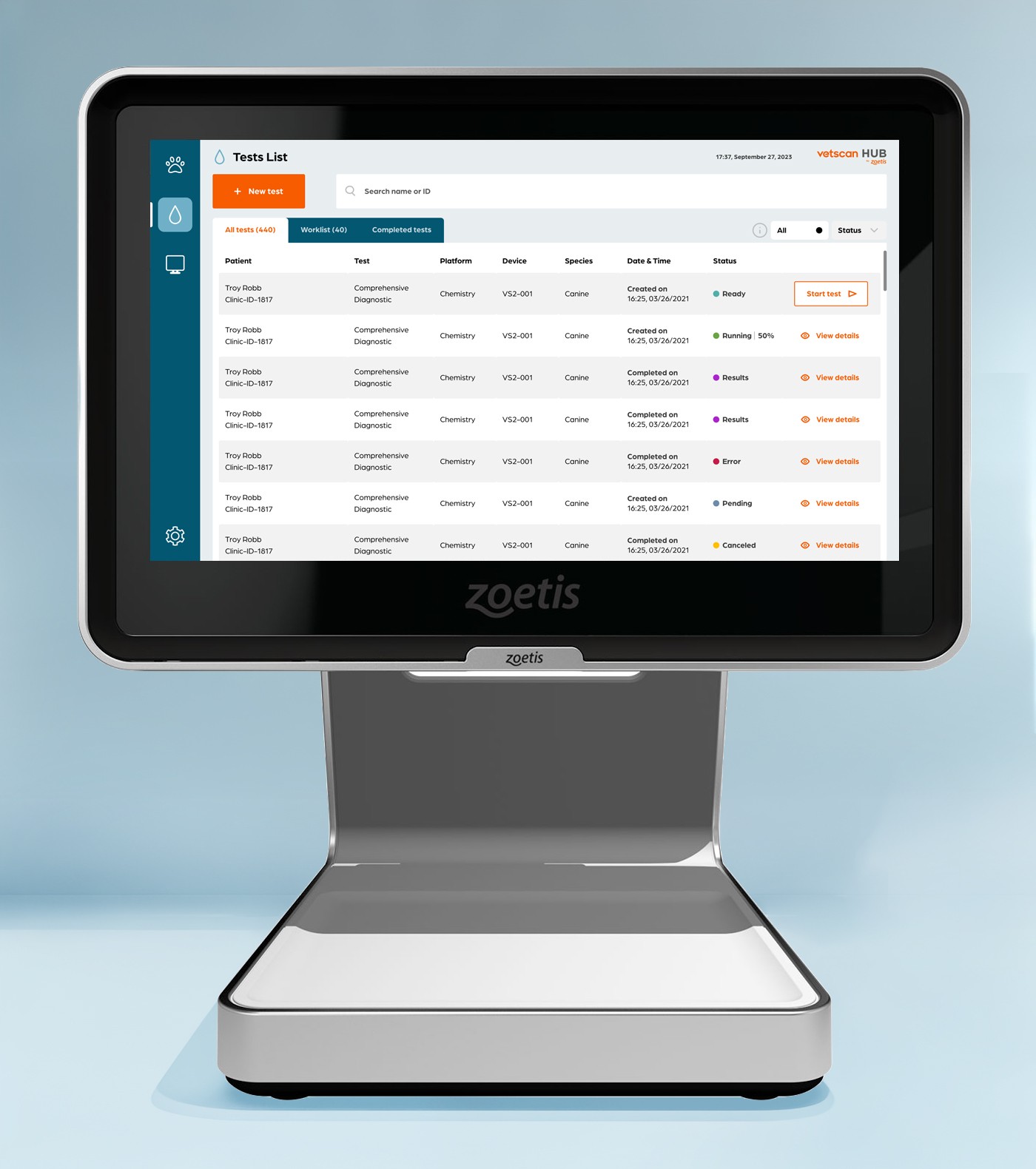
FigVETSCAN Hub: custom-built diagnostic device used in clinics to centralize test workflows.
Early exploration revealed that clinical workflows are not isolated steps — they overlap, evolve, and influence one another over time. Existing tools failed to reflect this reality, forcing tasks into rigid structures that stripped away context and introduced inefficiencies.
I led contextual and psychographic interviews to understand not just what users did — but why. I synthesized findings into a Customer Profile using the Value Proposition Canvas, built provisional personas, and conducted a competitor analysis to evaluate product features and identify functional gaps.
We uncovered hidden friction points across critical workflows, especially around pre-test setup and communication handoffs. These insights shaped our feature prioritization and reduced cognitive load — ensuring the product wasn't just usable, but genuinely useful within the real-world constraints of veterinary labs.
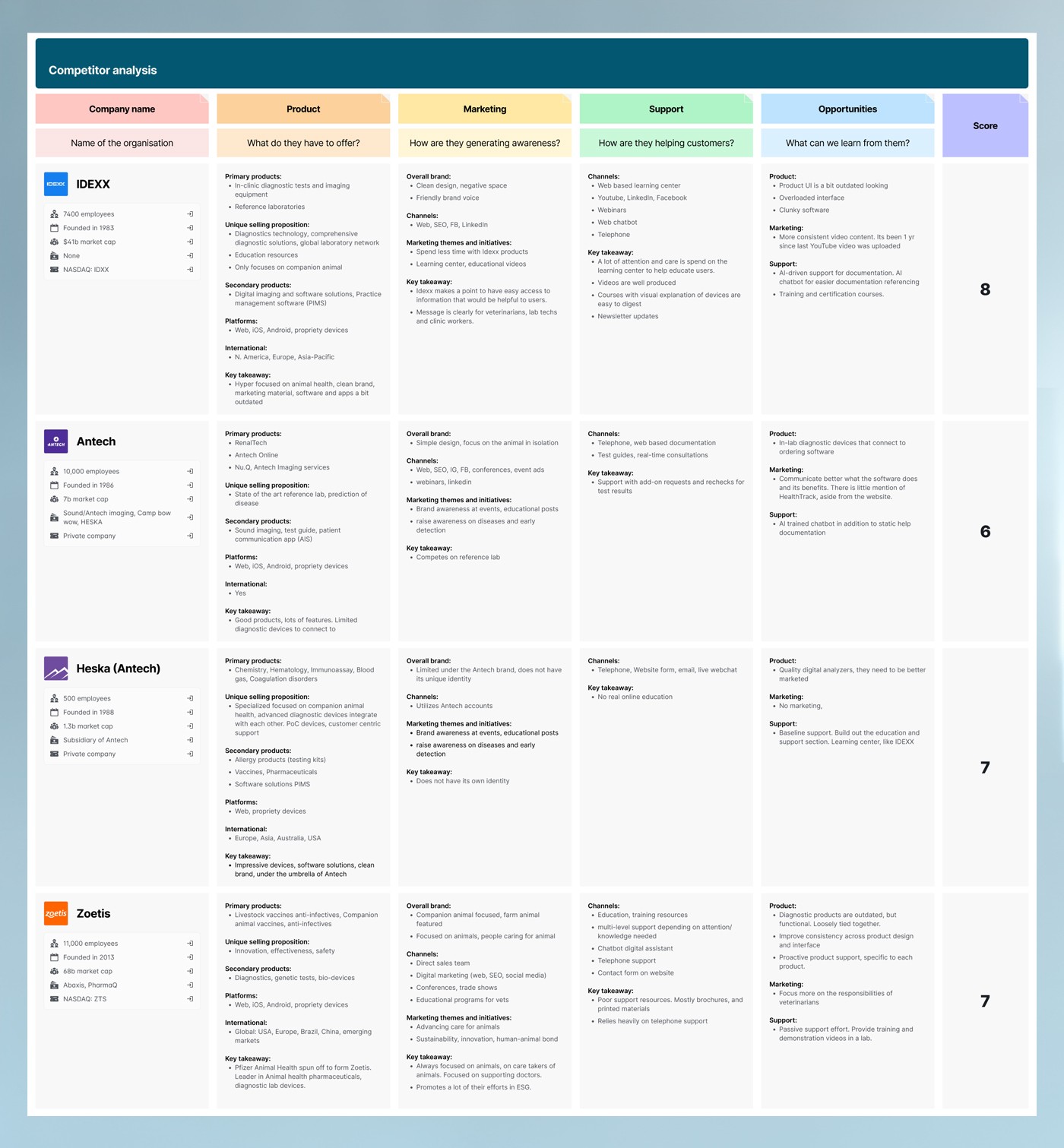
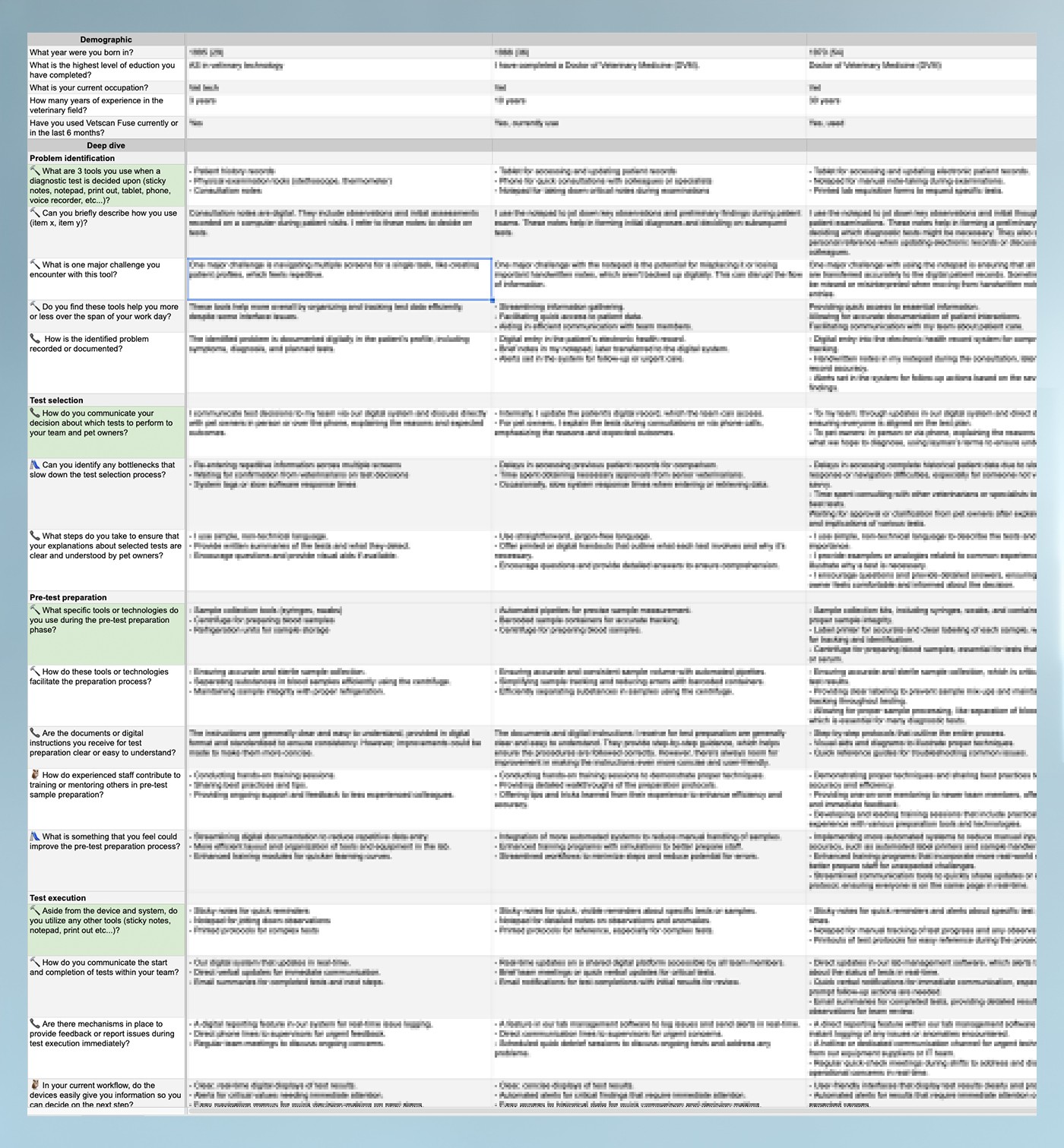
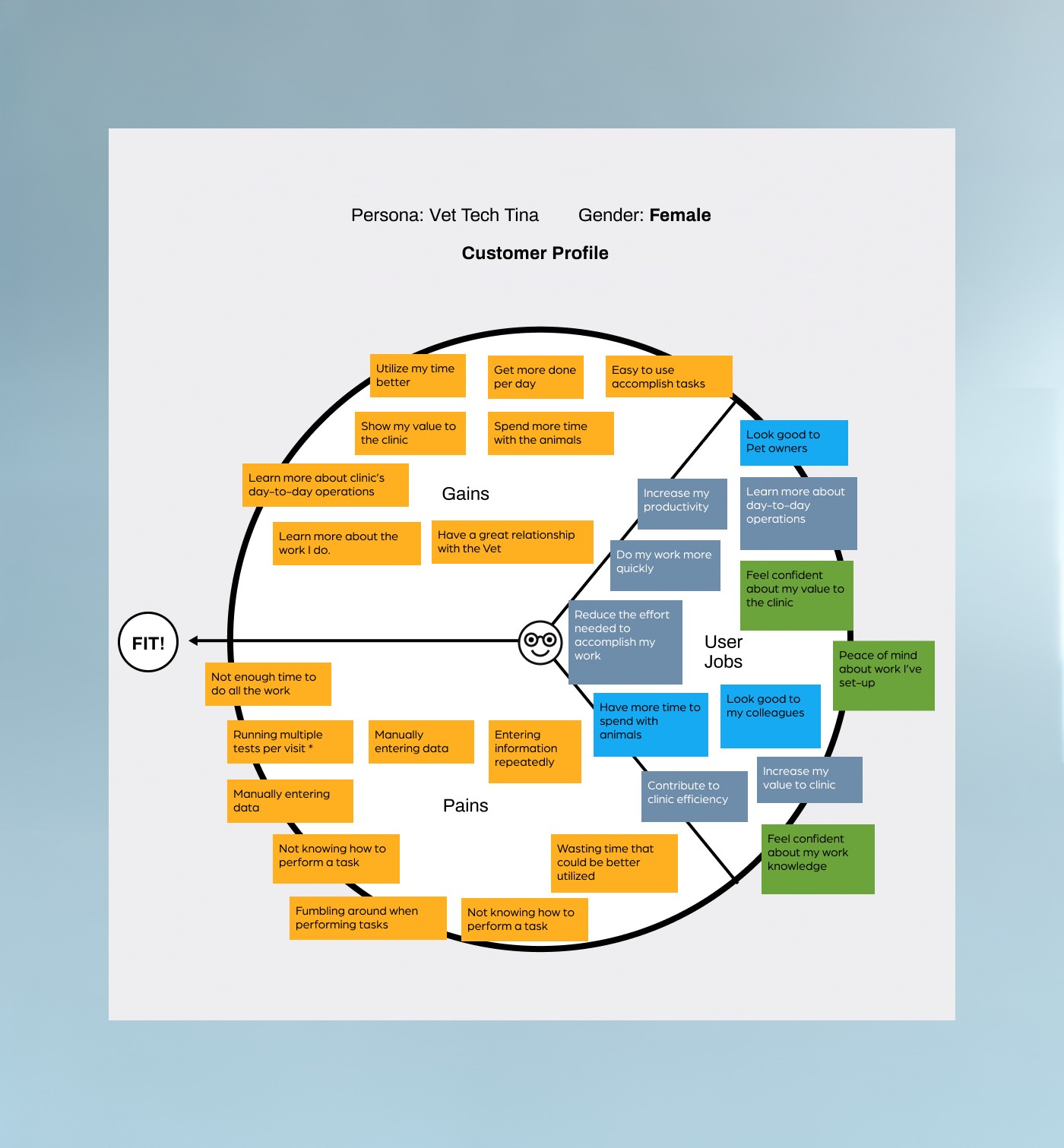
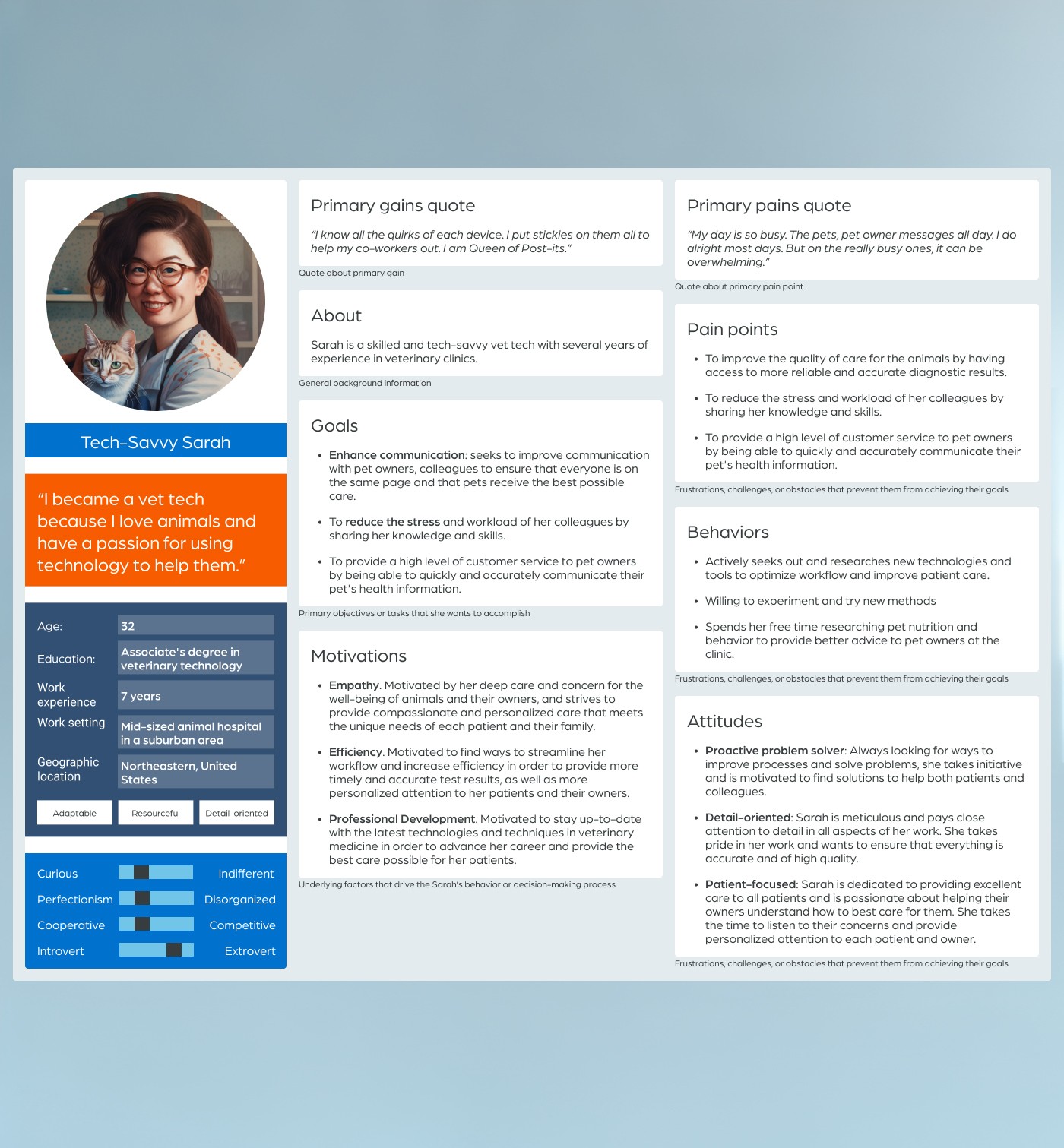
FigCompetitor analysis, interview summaries, customer profile, and persona artifacts used to synthesize research.
After interviews, we faced a new problem: how to prioritize a wide range of user needs. Many frustrations overlapped, but not all carried equal weight. Distinguishing surface-level annoyances from deeper workflow issues was essential.
I used a Value Proposition Canvas to organize user jobs and link them to their associated pains and gains. Each was categorized by type — functional, social, or emotional — and color-ranked by severity: critical (red), important (orange), medium (blue), and low (green).
The ranked canvas clarified what mattered most. Issues like repeated task flows, missed alerts, and decision fatigue surfaced as critical and shaped our early design direction.
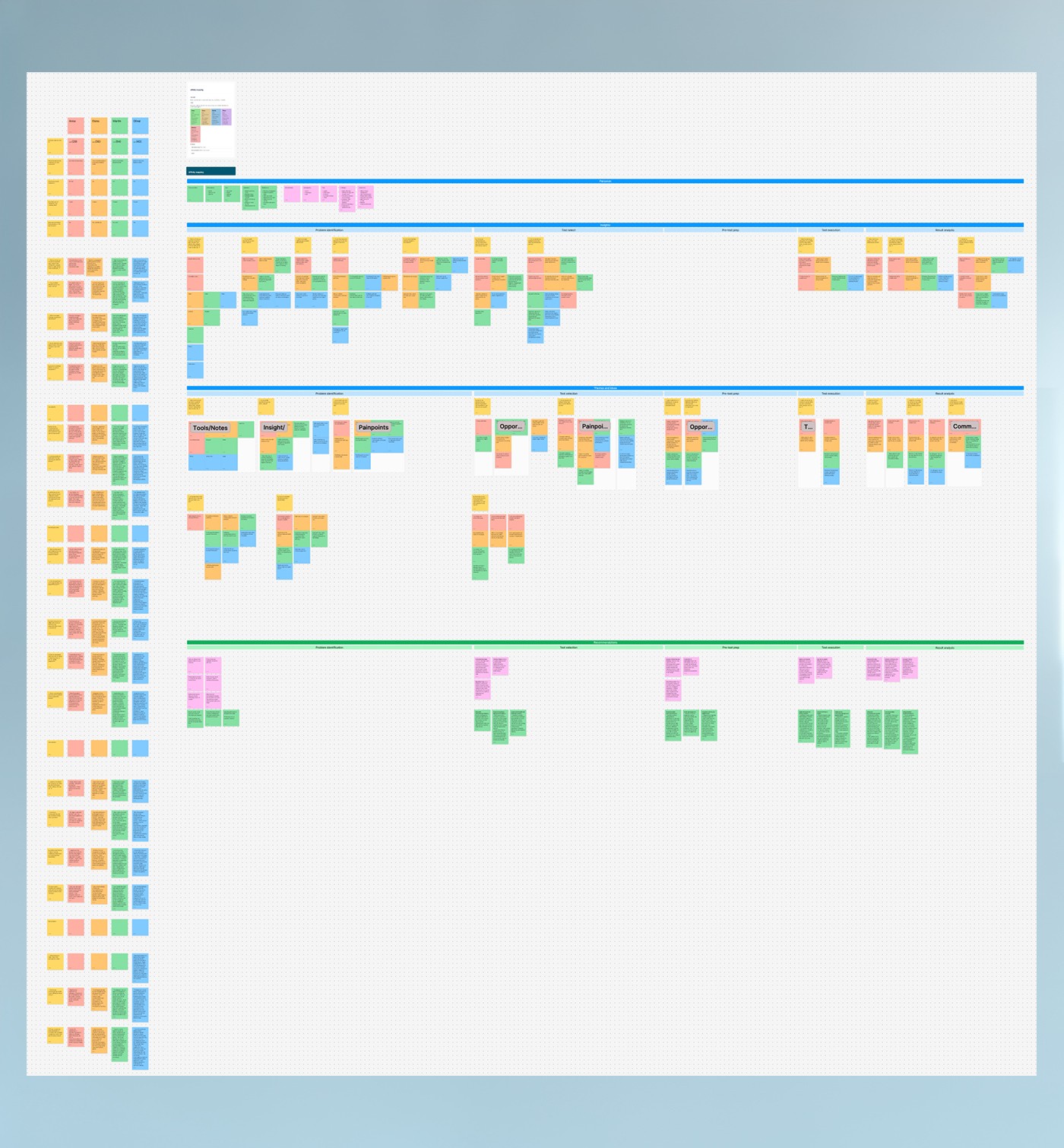
FigPrioritization board created from research synthesis.
Research revealed breakdowns in pre-test setup, result communication, and workflow clarity. Constraints included limited screen space, device variability, and differing staff roles.
I mapped workflows into a structured journey, labeling each phase by tools, pain points, and user needs. I iterated through wireframes and prototypes, validating them through in-person and remote testing.
The final designs streamlined test preparation, reduced cognitive load, and improved result visibility.
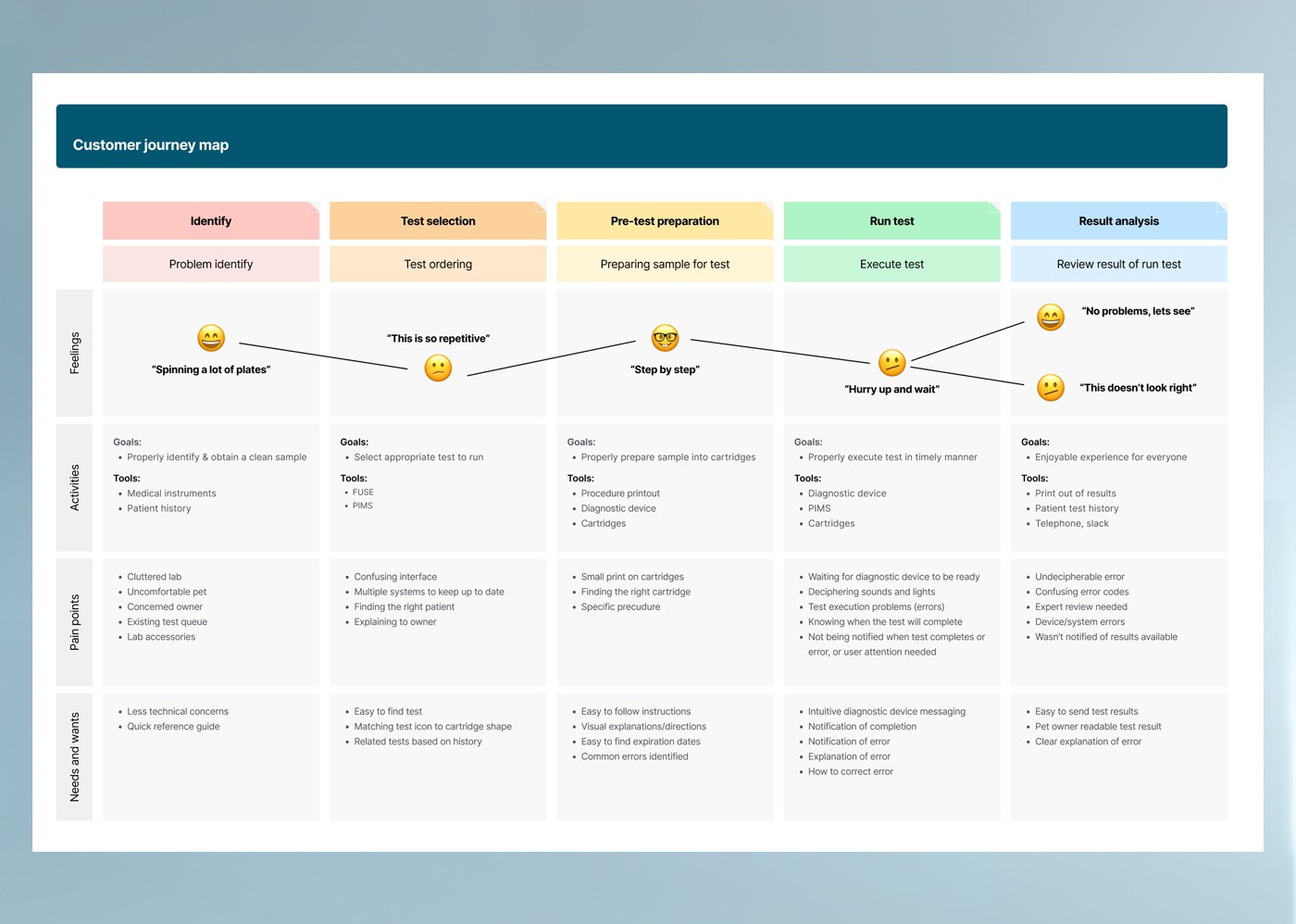
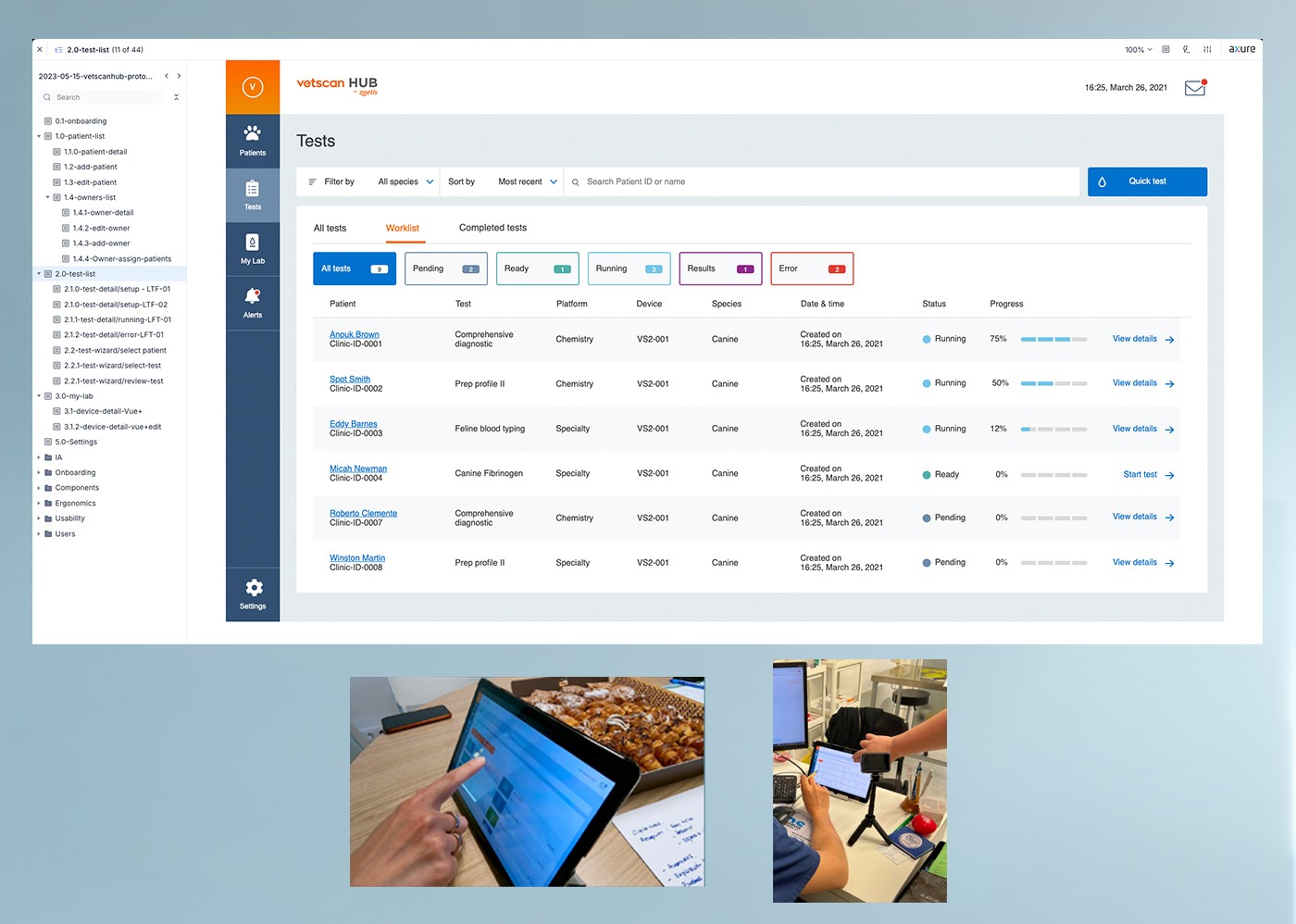
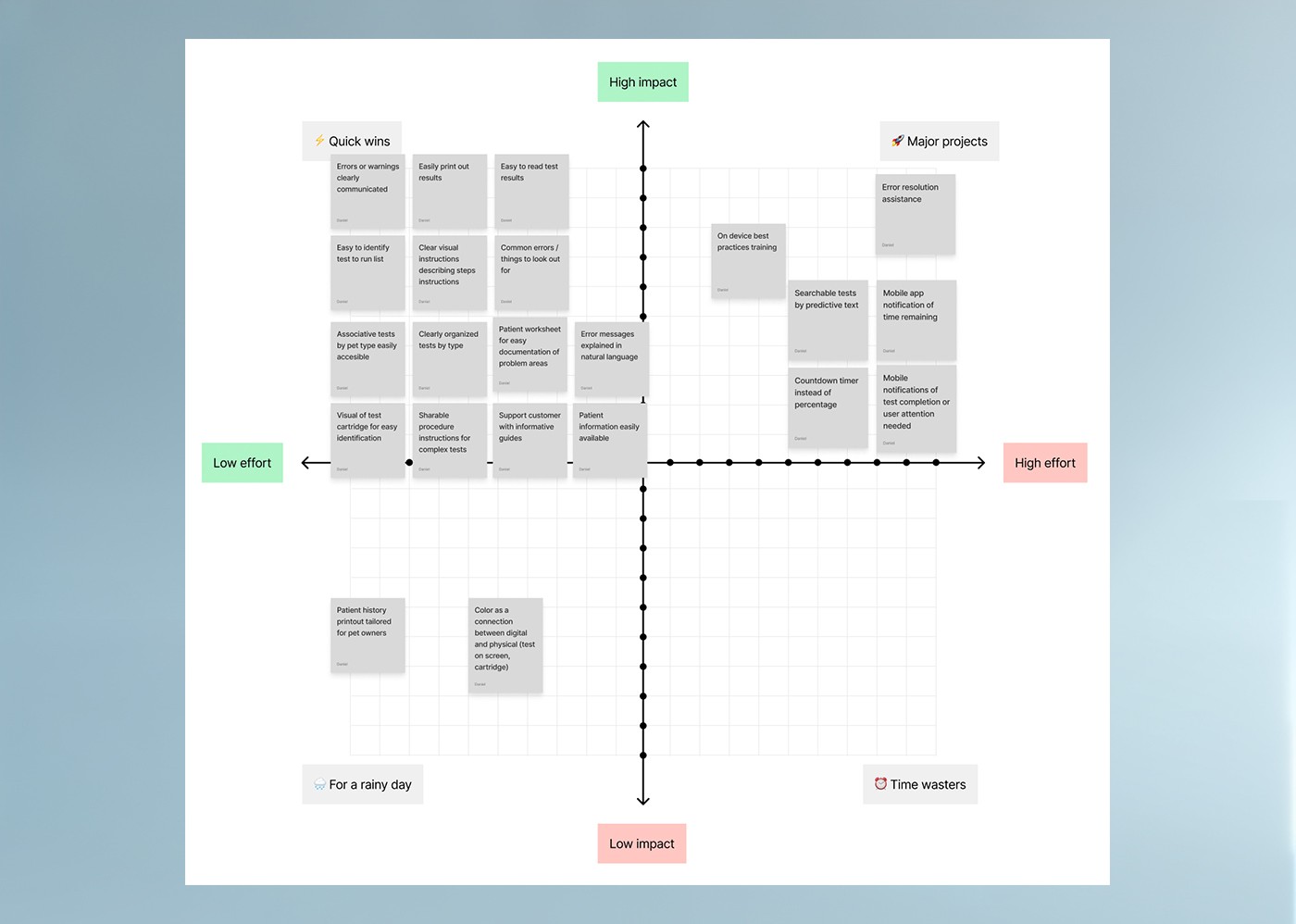
FigDesign process artifacts: workflow mapping, interaction design, and feature prioritization.
Veterinary staff struggled with inconsistent workflows, slow onboarding, and complex troubleshooting. Using multiple systems caused delays and created barriers to confident, efficient testing.
I applied poka-yoke design principles — designing systems to prevent user errors before they occur. I introduced clear progress states, built-in checks, and simplified result formats.
Workflows became easier to learn and harder to perform incorrectly. Errors decreased and confidence increased across roles.
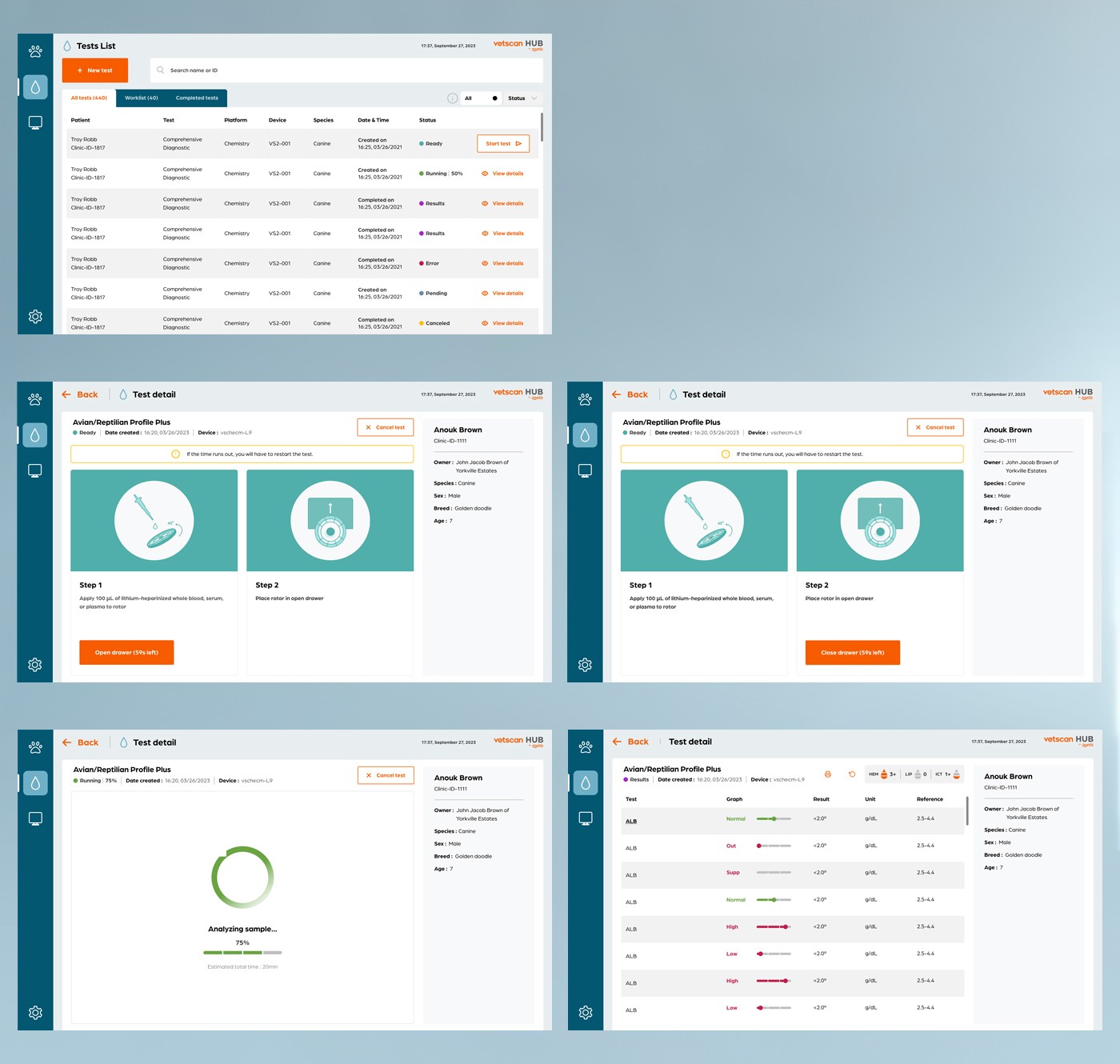
FigPrototype testing and consistent UI patterns improved usability across roles.
There was no unified design system, leading to duplicated effort and inconsistent interaction patterns.
I established consistent components, spacing rules, and interaction patterns aligned with Zoetis brand guidelines.
Development became more efficient, with reusable patterns and clearer handoff. Future expansion was supported without requiring redesign from scratch.
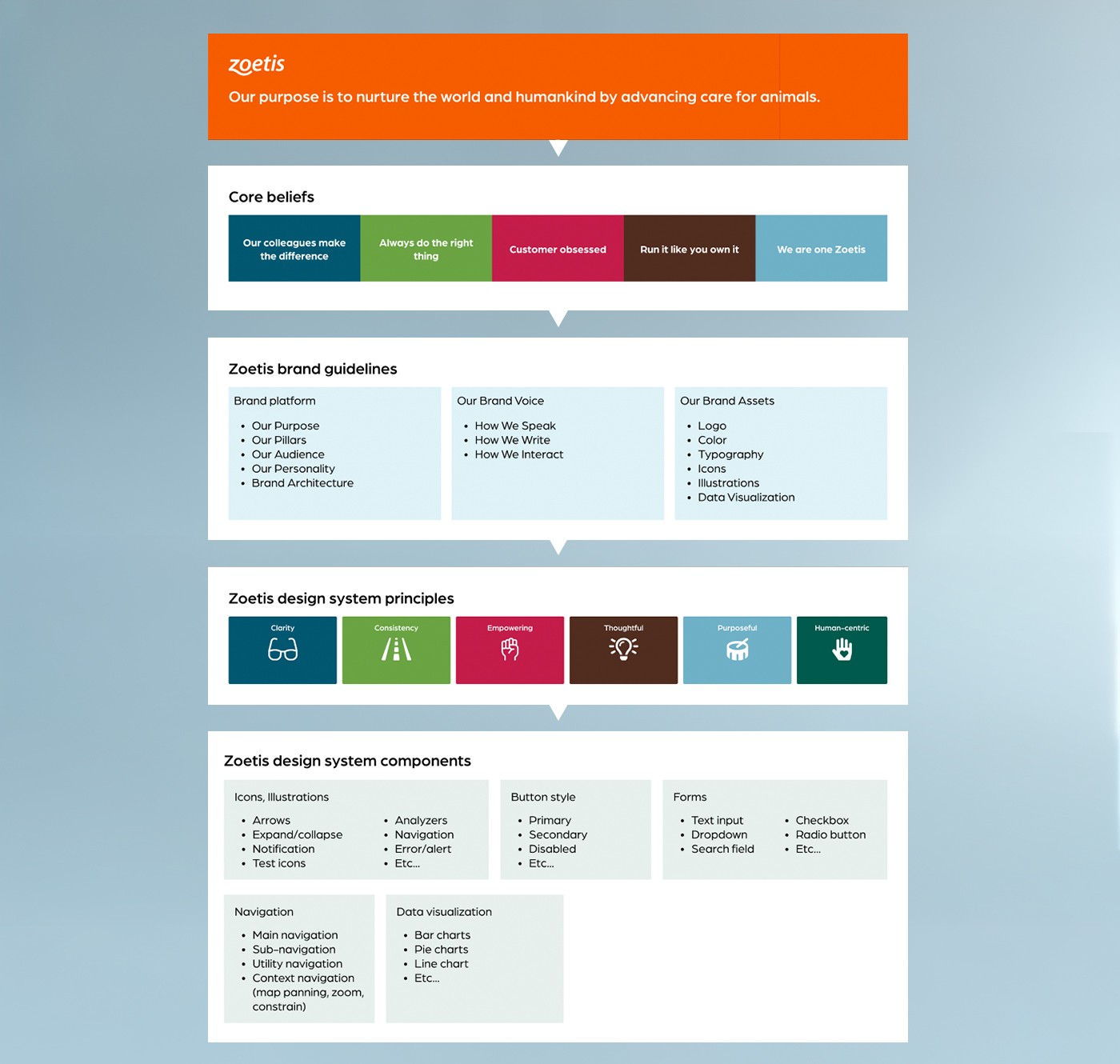
FigDesign system hierarchy connecting brand, components, and patterns.
Joining a large organization with no established design process required building structure from scratch. Introducing design into an environment without existing frameworks meant defining methods, aligning stakeholders, and embedding design thinking early in the product lifecycle.
A first-principles mindset helped uncover insights, align stakeholders, and ground decisions in real user needs. This experience reinforced how to drive clarity in complex environments and build systems that scale across teams and products.