authorized crew only
sequence XB-900
Petfinder is one of the largest pet adoption platforms in the US. It connects people looking to adopt with shelters and rescue organizations across the country. The platform needed a full redesign on both sides — the consumer experience for adopters, and the professional tool used by shelter workers to manage listings and applications.
I designed both sides of the platform as part of the product design team at POSSIBLE, a digital agency. My responsibilities included mapping the full site architecture across consumer and professional products, designing the consumer search, filtering, and pet discovery experience, designing the adopter profile and personalization system, designing the shelter management tool including pet listing and bulk workflows, and creating interaction patterns and annotated wireframes across both products.
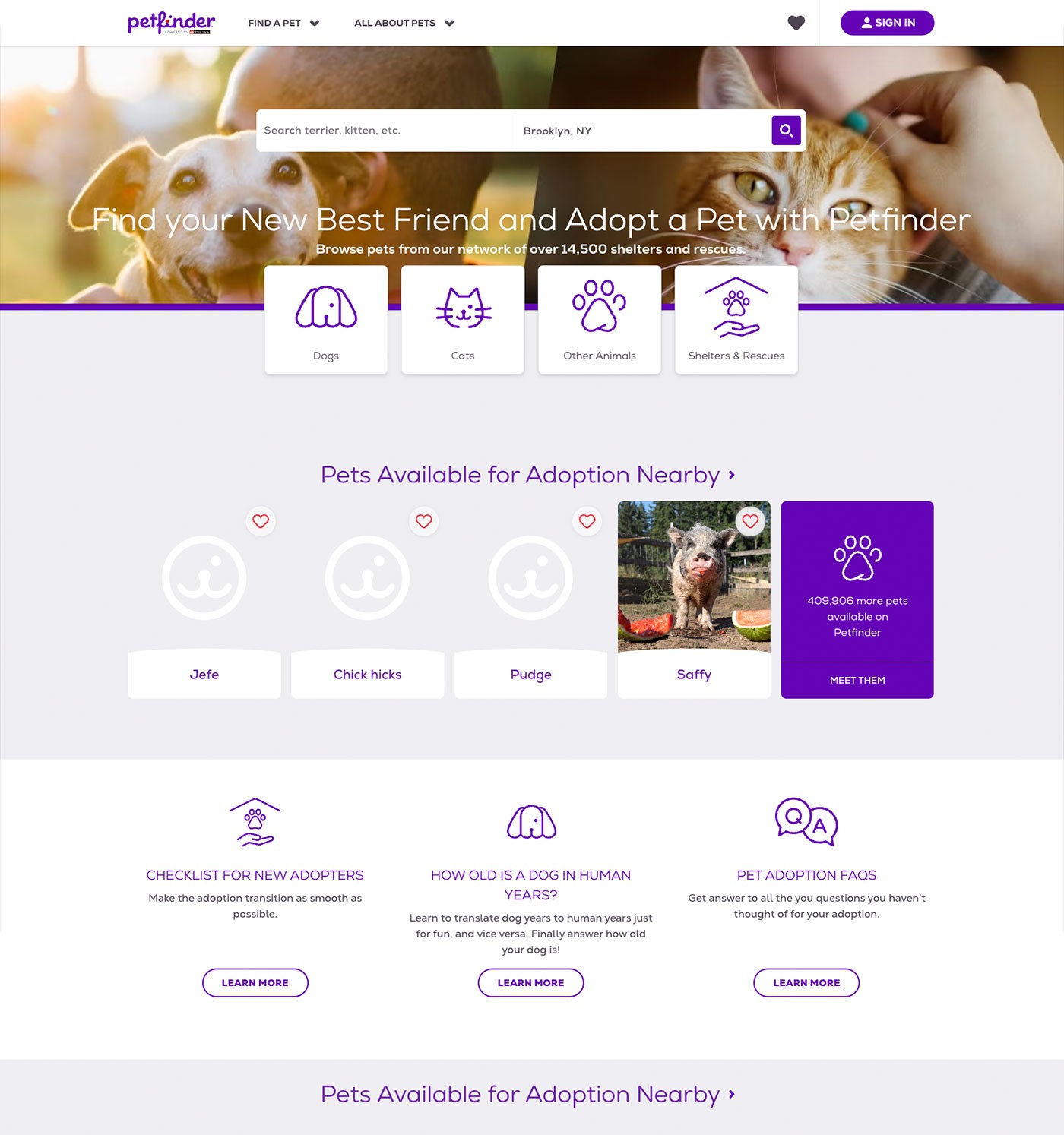
FigThe redesigned Petfinder consumer experience — search, discovery, and adoption in one cohesive platform.
Petfinder is a two-sided marketplace. It only works if both sides work well. On the consumer side, pet adoption is an emotional decision — not a transactional one. The existing experience treated it like a catalog. Search was shallow. There was no way to filter by lifestyle or personality match. Nothing helped people return and compare pets over time.
On the professional side, shelter workers were managing dozens to hundreds of active listings at a time. Status changes, bulk updates, and application tracking were core daily tasks — often done from a phone. The tool wasn't built around how shelters actually operate. Rather than treating these as two separate problems, the redesign needed to address both through a shared information model. The same pet data had to serve two completely different users — an adopter looking for a match, and a shelter worker managing inventory.
The core design challenge required surfacing the right pet for adopters rather than just any pet, reducing the time and friction of keeping listings accurate and current for shelters, and making the same data readable in two completely different contexts.
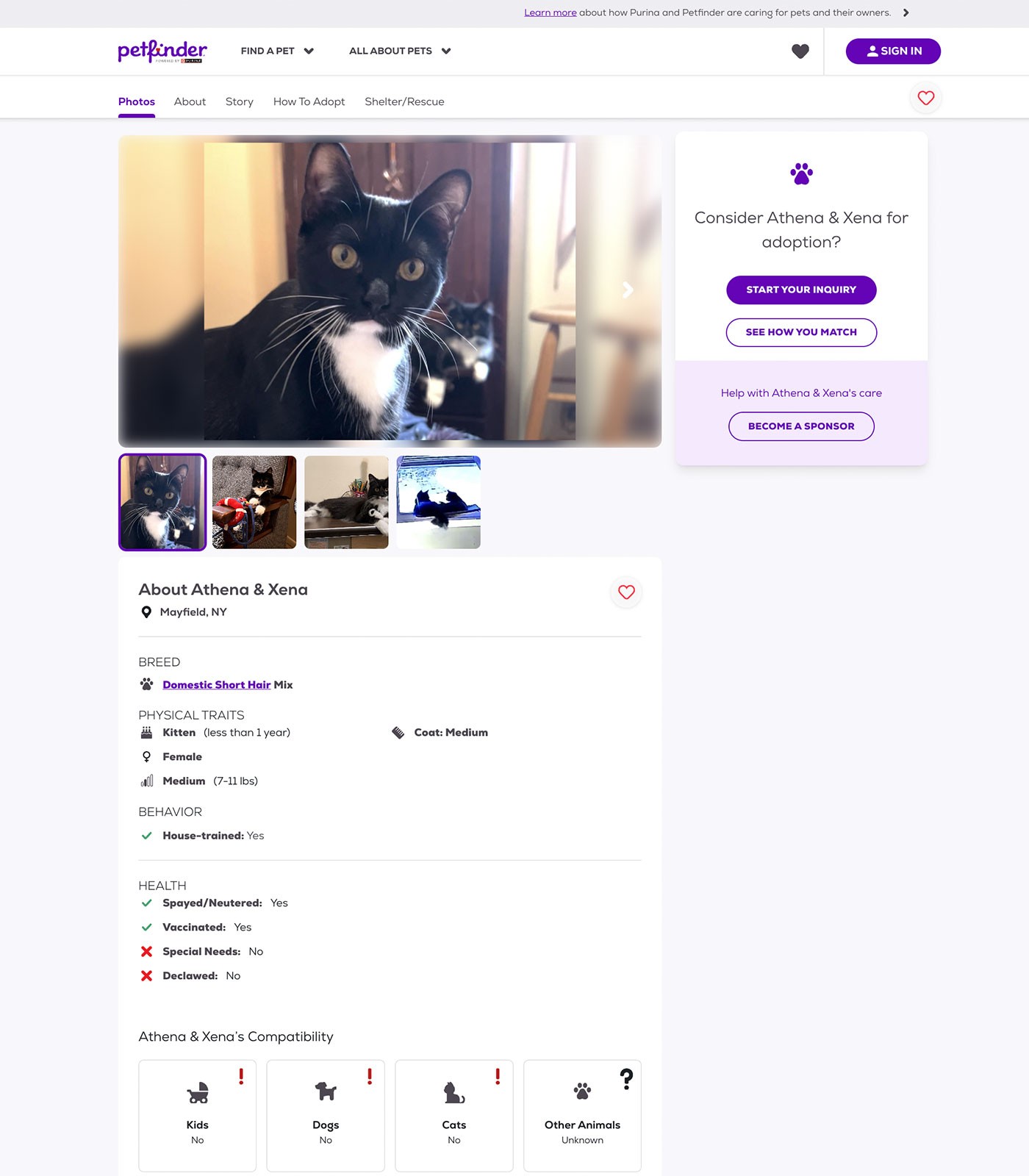
FigPet profile page design showing personality traits, health status, and adoption readiness.
Rather than starting with UI patterns, the design was grounded in how each user type actually thinks about pets. Adopters think in lifestyle terms — how active is the pet, does it fit their environment, is it good with kids. The design translated these into structured, filterable attributes. Shelter workers think operationally — what is live, pending, or resolved. They need speed, clarity, and the ability to act across many listings.
At the core was a pet attribute system using personality traits (athleticism, curiosity, cuddle factor, copeability), expressed as visual sliders. These traits were used in both search filters and listing creation. Pet status was explicitly modeled: Live, On Hold, Draft, Adopted, Transferred, Other. Aligning both products to the same data model ensured that what shelters entered directly shaped what adopters could find.
The experience supported a multi-session, emotional decision process. Users browse, save, return, and compare over time. Search began with simple inputs (type and zip code), expanding into deeper filtering. Lifestyle attributes enabled better matching.
Pet pages featured structured data: personality traits, health status, care requirements, and logistics. Related pets extended discovery. Users had a persistent profile including a Top 4 shortlist, favorites, saved content, and adoption progress tracking.
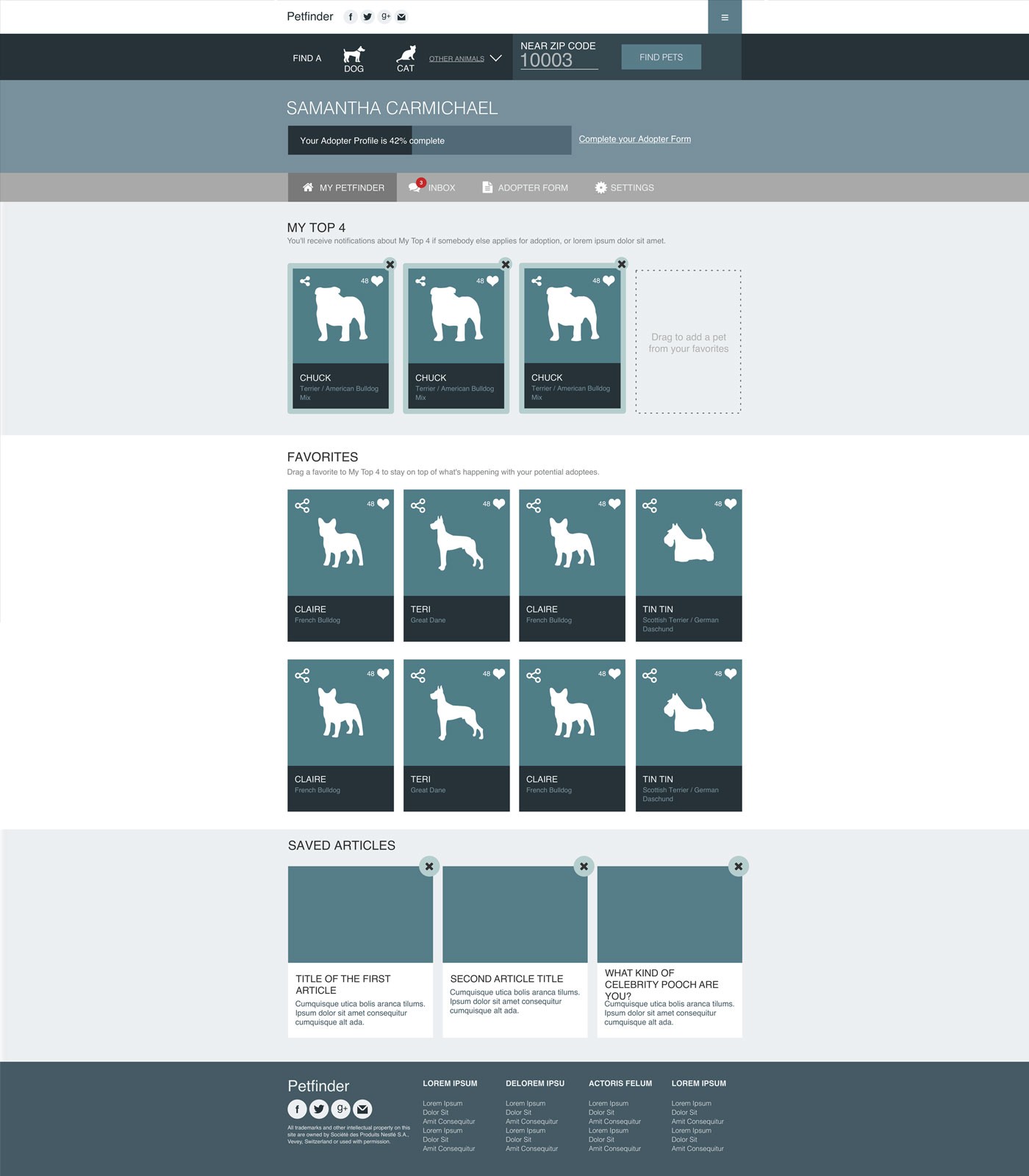
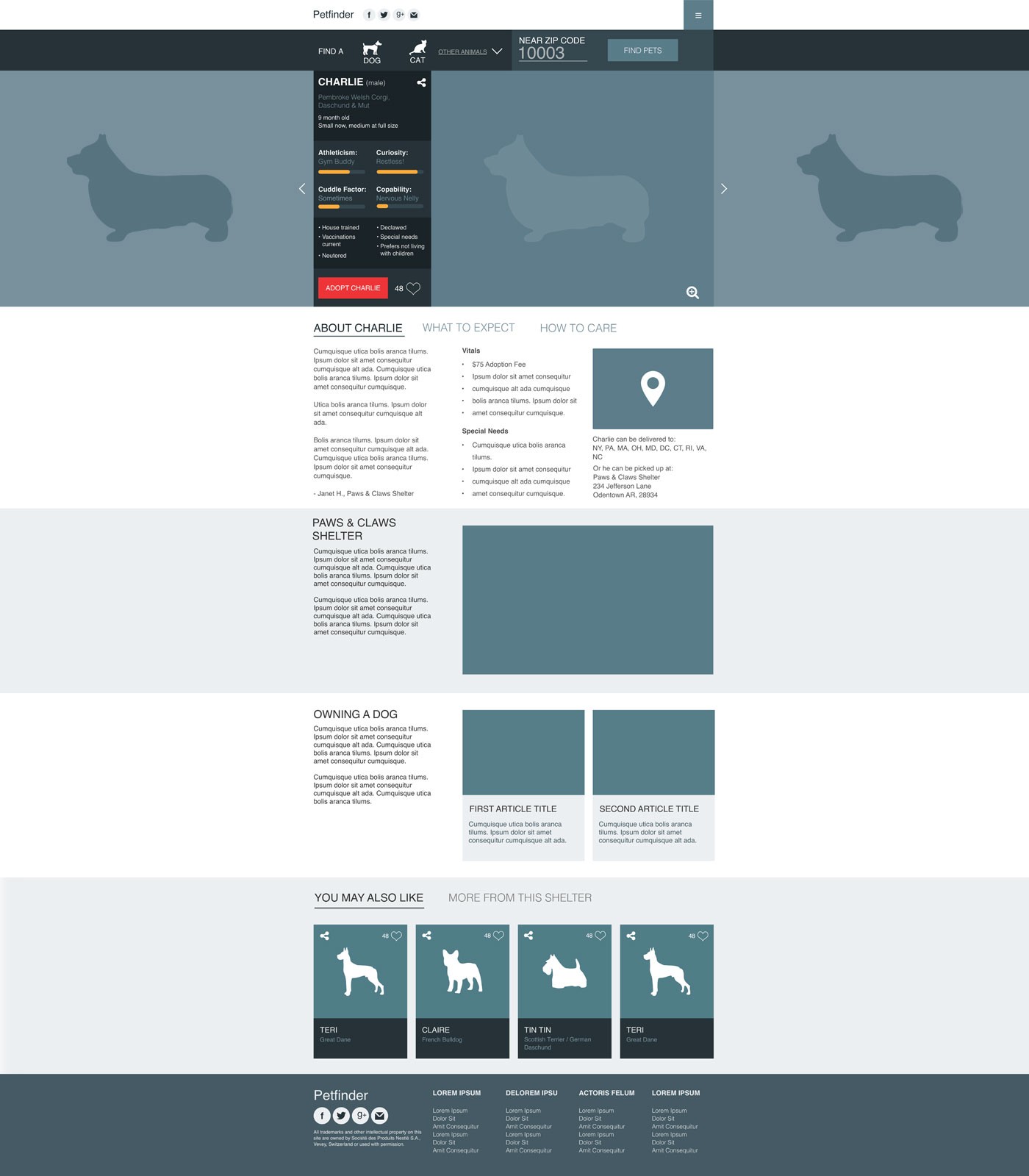
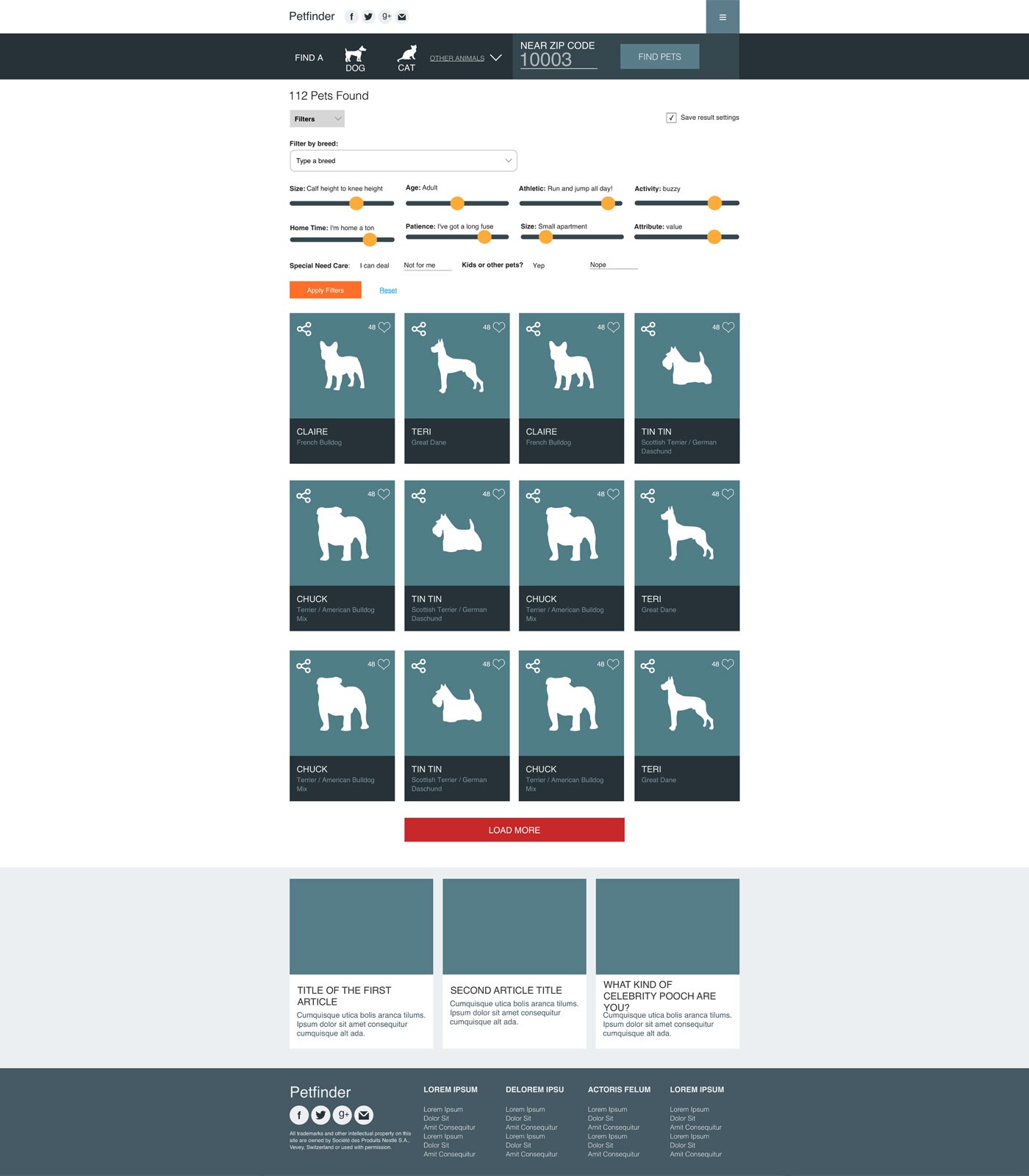
FigSearch, pet profile, and dashboard supporting different stages of adoption.
Designed mobile-first for real-world use. Prioritized speed, clarity, and bulk actions. The active pet listing displayed key operational data (applications, days listed, favorites). It supported sorting, filtering, and bulk actions. The list a pet flow was a guided 6-step listing process with tips and completeness indicators. Inactive pets had a separate view for non-active listings with identical structure and bulk controls.
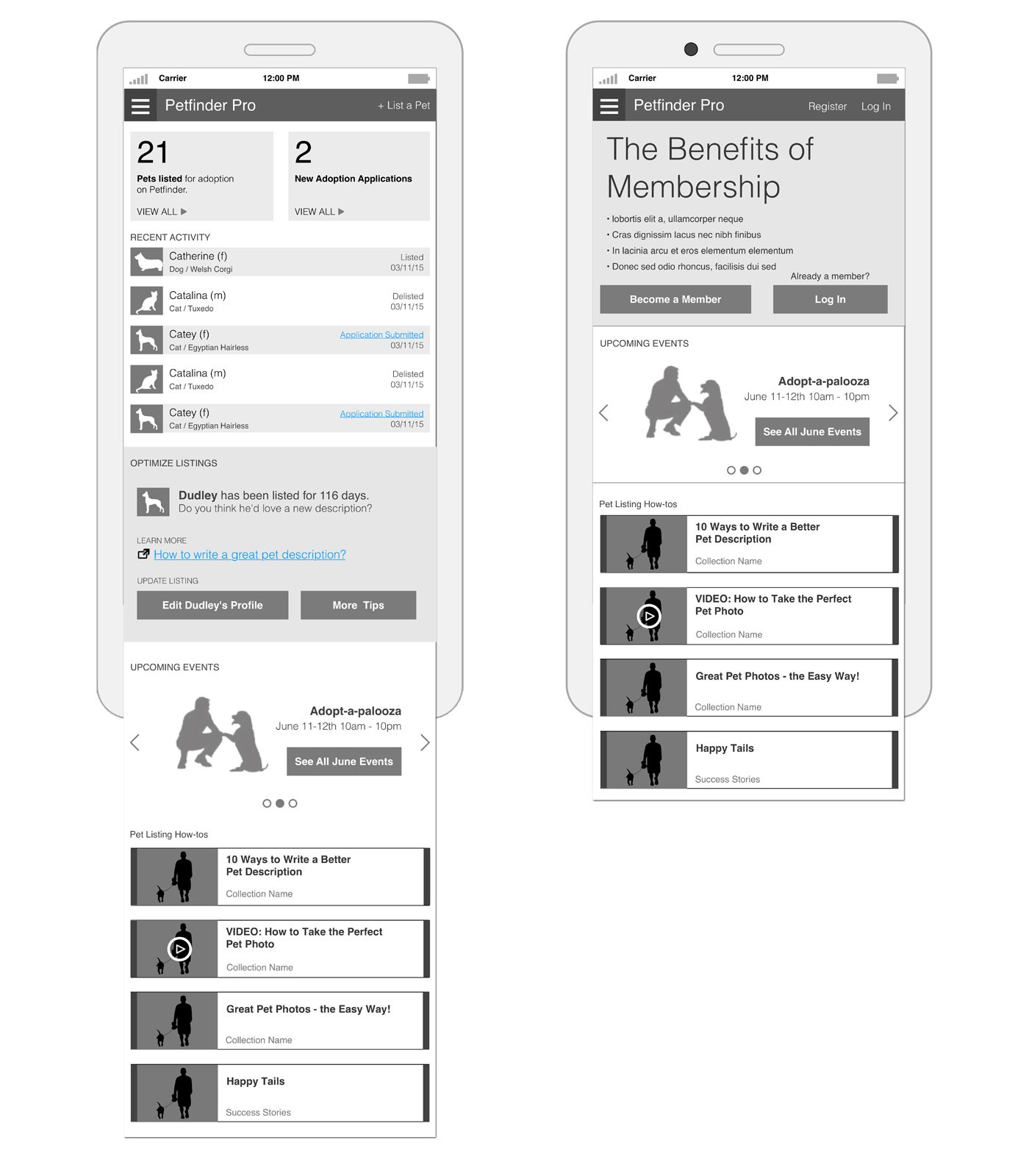
FigShelter tool designed for fast list management, bulk actions, and guided workflows.
The same data model served two distinct user experiences without duplication.
Adopters interpret data emotionally; shelter workers input it operationally. The system supports both.
Design decisions accounted for high-volume use cases, ensuring the tool worked for shelters managing hundreds of pets.